 Aidan
Aidan Why You Still Can’t Lose Weight and What Actually Changes Over Time
You are working out, eating less, and nothing is changing
You lift weights.
You watch your food.
You try to stay consistent.
But your body still feels soft.
The scale barely moves.
Your energy is gone by mid-day.
Patients say this all the time.
“I’m doing everything right.”
“My workouts don’t work anymore.”
“I feel stuck in this body.”
If this sounds like you, testosterone and body composition may be part of the picture.
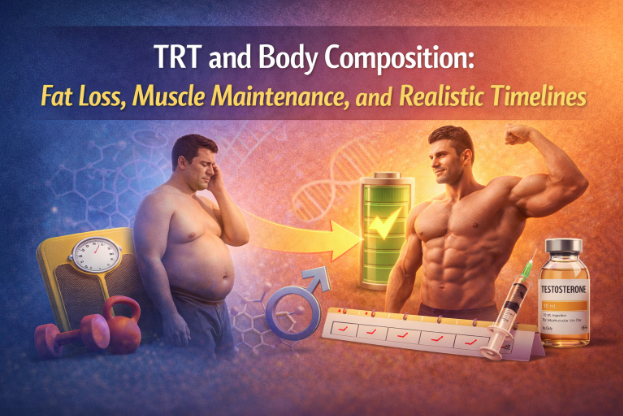
What TRT Really Does for Fat Loss and Muscle
TRT stands for testosterone replacement therapy.
Testosterone helps your body:
- Build and keep muscle
- Burn fat more efficiently
- Recover from workouts
- Feel motivated and energized
When testosterone is low, your body shifts into storage mode.
It holds onto fat.
It breaks down muscle.
Weight loss feels impossible no matter how hard you try.
TRT can help correct that imbalance.
Why TRT Is Not a Quick Weight Loss Fix
This is where expectations matter.
TRT does not melt fat overnight.
It does not replace nutrition or movement.
It does not fix everything on its own.
Patients often ask:
“Why isn’t the scale dropping yet?”
“I thought this would work faster.”
“I feel better but my weight is the same.”
That does not mean it is not working.
What Changes First With TRT
Energy and motivation come first
Most people notice better energy within weeks.
You feel more like yourself.
Workouts feel possible again.
Brain fog starts to lift.
Muscle maintenance improves
Your body holds onto muscle instead of breaking it down.
You may look firmer before you look smaller.
Fat loss takes longer
Fat loss happens slowly as your metabolism repairs itself.
This is where patience is needed.
Realistic Timelines Patients Need to Hear
Here is what we often see.
- Weeks 2 to 4: Better energy and mood
- Months 2 to 3: Strength and muscle tone improve
- Months 3 to 6: Body composition starts to shift
- Months 6 and beyond: Fat loss becomes more noticeable
This is not failure.
This is your body healing.
Why Conventional Medicine Sets You Up for Frustration
In conventional care, TRT is often prescribed based on one lab number.
Little guidance is given.
Follow-up is minimal.
Expectations are unclear.
When results are slow, patients feel discouraged.
No one explains how hormones, stress, sleep, and inflammation affect fat loss.
How Functional Medicine Supports Better Results
Functional medicinelooks at the whole system.
We use advanced testing to understand:
- Total and free testosterone
- SHBG and hormone binding
- Cortisol and stress response
- Insulin resistance and inflammation
We support TRT with nutrition, recovery, and tools that help the body heal.
Some patients also ask about peptides, semaglutide, or even things like hydrolyzed bovine collagen peptides to support joints, gut health, and recovery so workouts feel easier and more sustainable.
TRT works best when the body feels supported, not rushed.
Is Tirzepatide a Peptide and Should You Combine It With TRT?
Yes. Tirzepatide is a peptide.
Peptides like tirzepatide and semaglutide can help control appetite and blood sugar.
Some people consider them because weight loss feels stalled.
But peptides do not fix low testosterone.
They do not rebuild muscle.
They do not address why your metabolism slowed down.
That is why layering therapies without understanding the root cause often leads to disappointment.
Why Your Body Is Not the Problem
If you feel stuck, it is not because you are lazy.
If weight loss feels harder than it used to, it is not your fault.
Your hormones changed.
Your stress load increased.
Your body adapted to protect you.
TRT can help, but only when it is part of a bigger plan.
Want to Learn More Before Making Changes?
If you are tired of guessing and want to understand why your body is resisting fat loss, start with education.
Our podcasts and webinars explain hormones, metabolism, and why weight loss takes time even when you are doing everything right.
No pressure.
No sales pitch.
Just real explanations that help you feel informed and in control again.
When you understand what your body needs, the timeline finally makes sense.